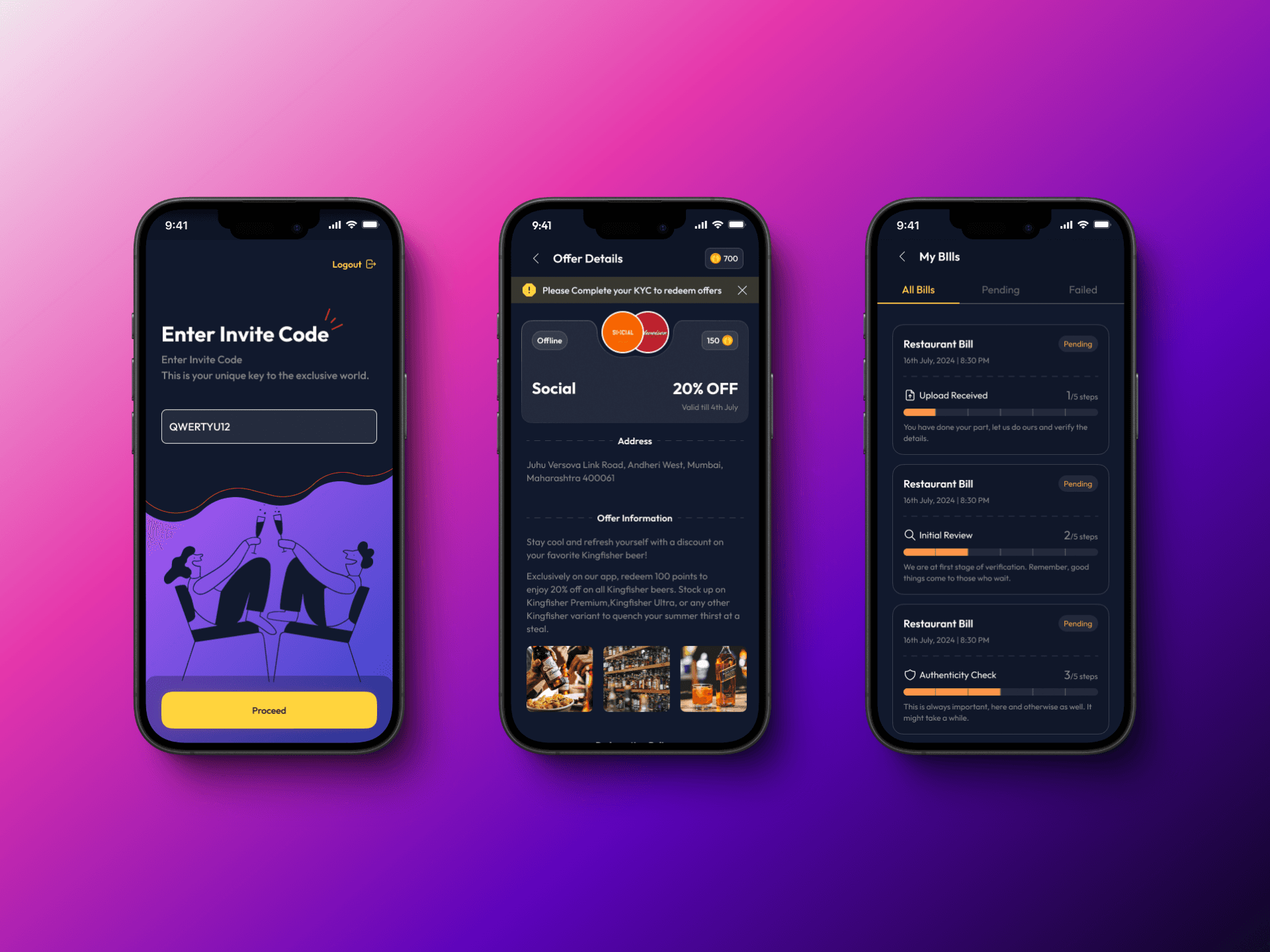
FuBo: A Mobile App for Alcohol rewards
Client
FuBo
Duration
1 month
Category
PRODUCT DESIGN
What was the challenge?
How can we create a seamless, engaging platform that rewards alcohol enthusiasts for their purchases while offering valuable insights to premium alcohol brands?
Key obstacles included:
• Simplifying user onboarding while ensuring KYC compliance and age verification.
• Encouraging repeat engagement on the platform with non-transactional incentives.
• Balancing transparency with data protection for users and brands.
• Appealing to premium alcohol brands through data-driven user insights without compromising user trust.
• Designing an intuitive, mobile-first interface to suit a broad user base in metro cities.
What was the goal?
1. Build a responsive, mobile-first web platform targeting urban alcohol enthusiasts.
2. Drive weekly engagement by integrating rewards, offers, and rich brand-centric content.
3. Enable alcohol brands to leverage anonymized user consumption data to design tailored offers.
4. Maintain a non-transactional, user-friendly experience.
Our Process
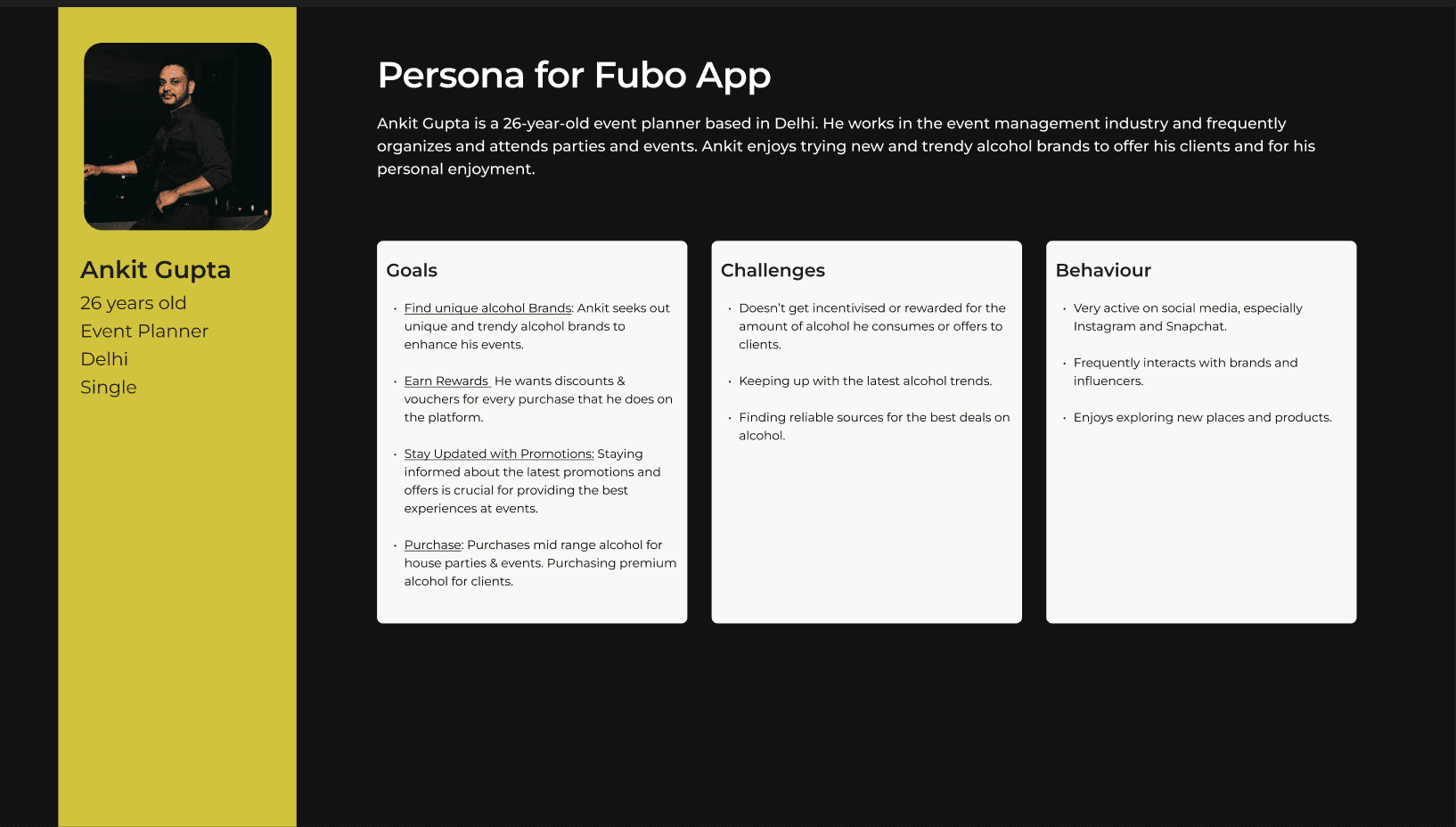
1. User-Centric Research
• Target audience definition: Urban alcohol consumers aged 25+ who frequent wine shops and premium outlets.
• Conducted competitive analysis (drawing parallels to apps like MagicPin).
• Explored pain points of alcohol lovers around offers and rewards.
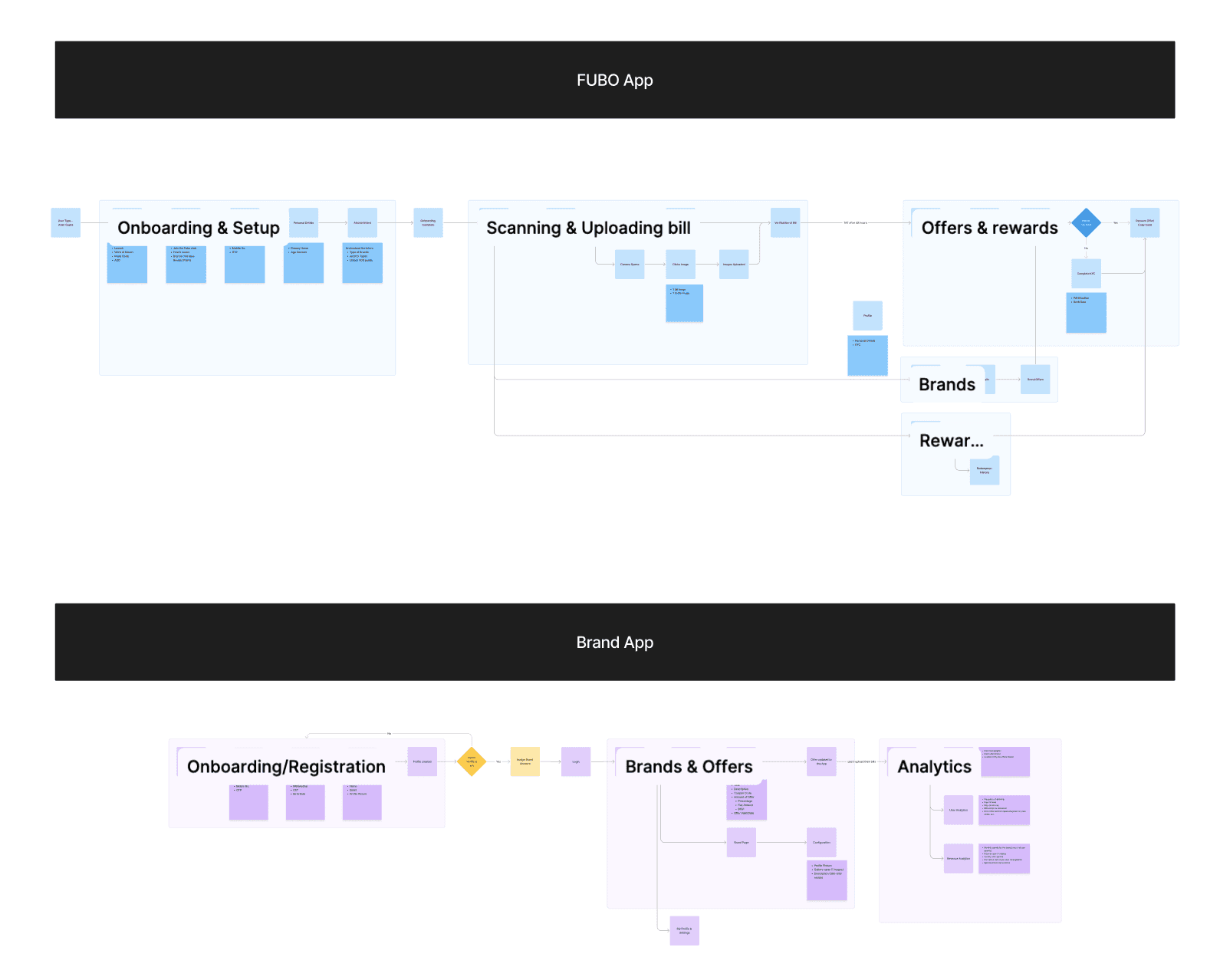
2. Information Architecture
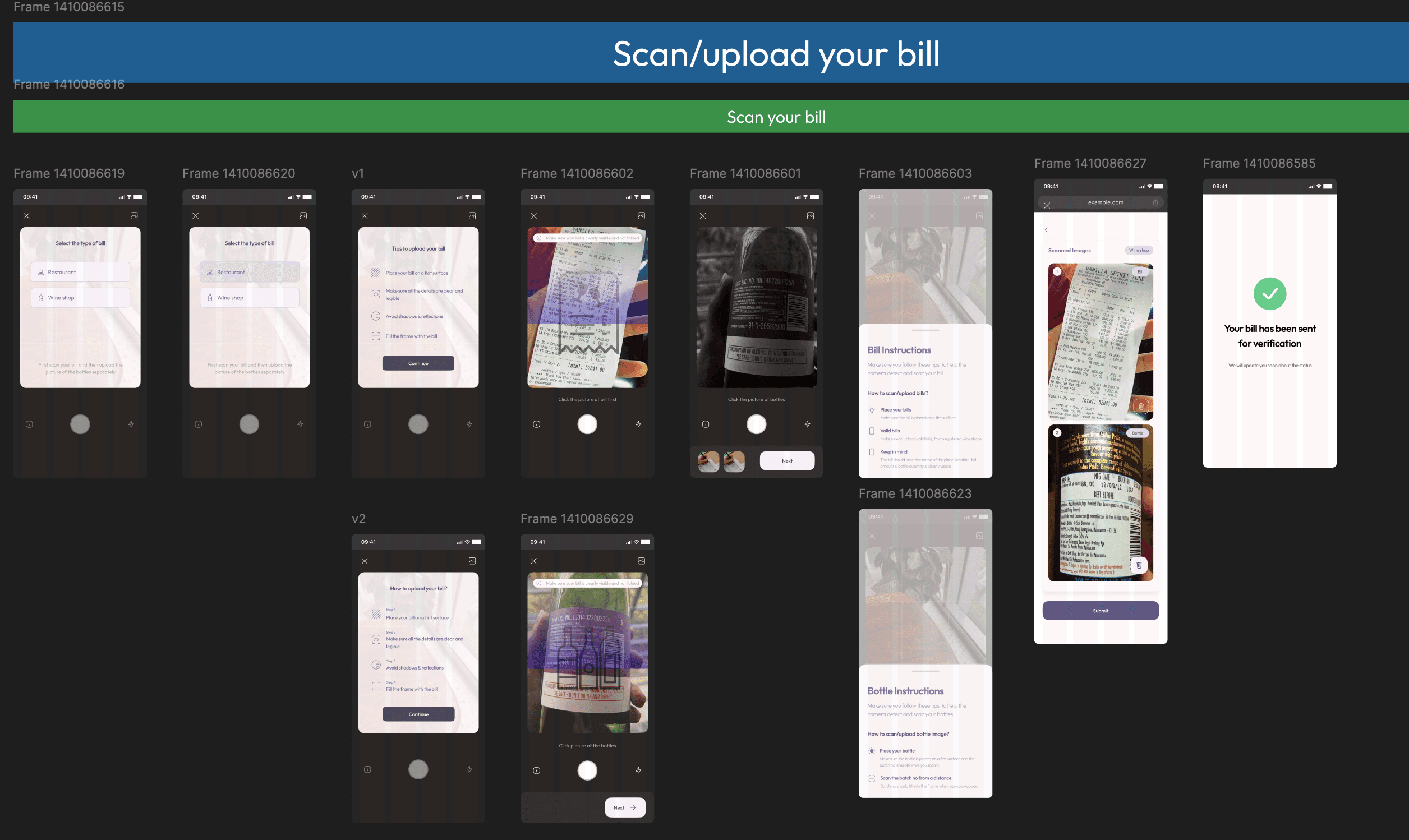
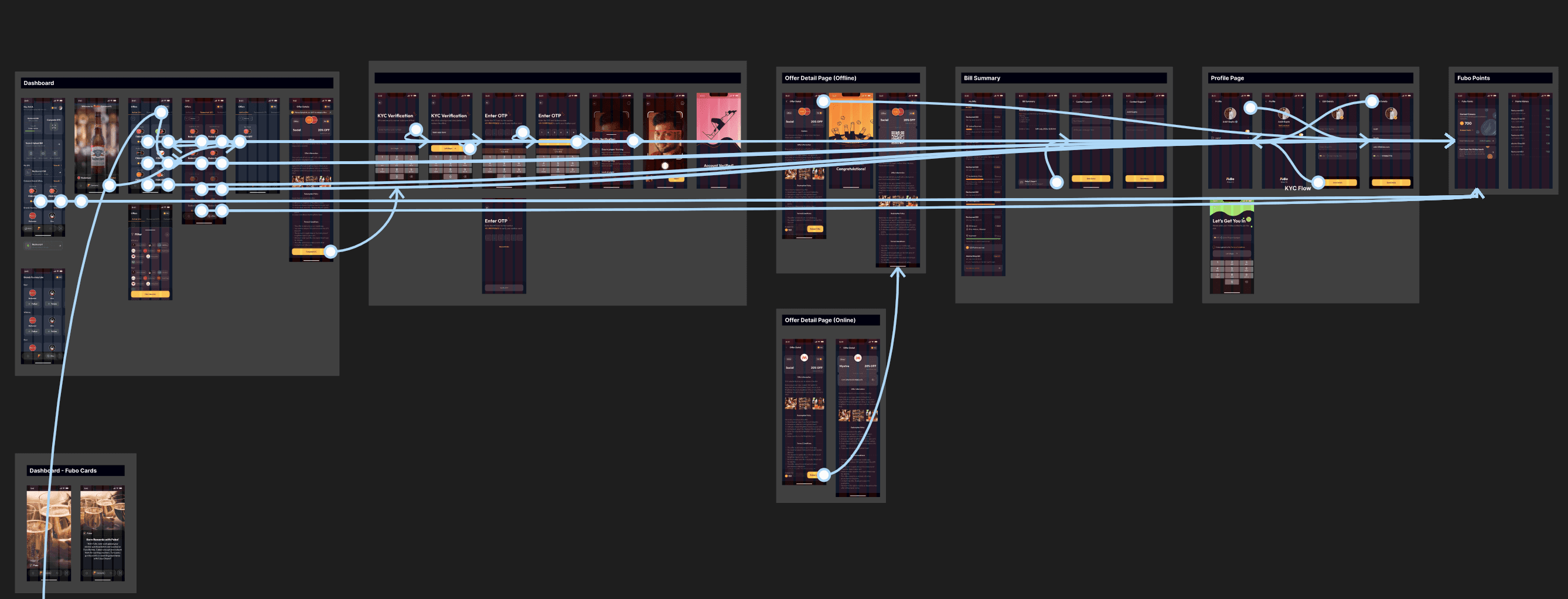
• Designed clear user flows for KYC onboarding, bill uploads, and rewards redemption.
• Categorized features into two flows: KYC and Skip-for-Now.
3. UX Design
• Focused on mobile-first design principles to ensure responsiveness.
• Developed features such as:
• Bill Upload System: Seamless photo upload with bifurcation for wine shops and restaurants.
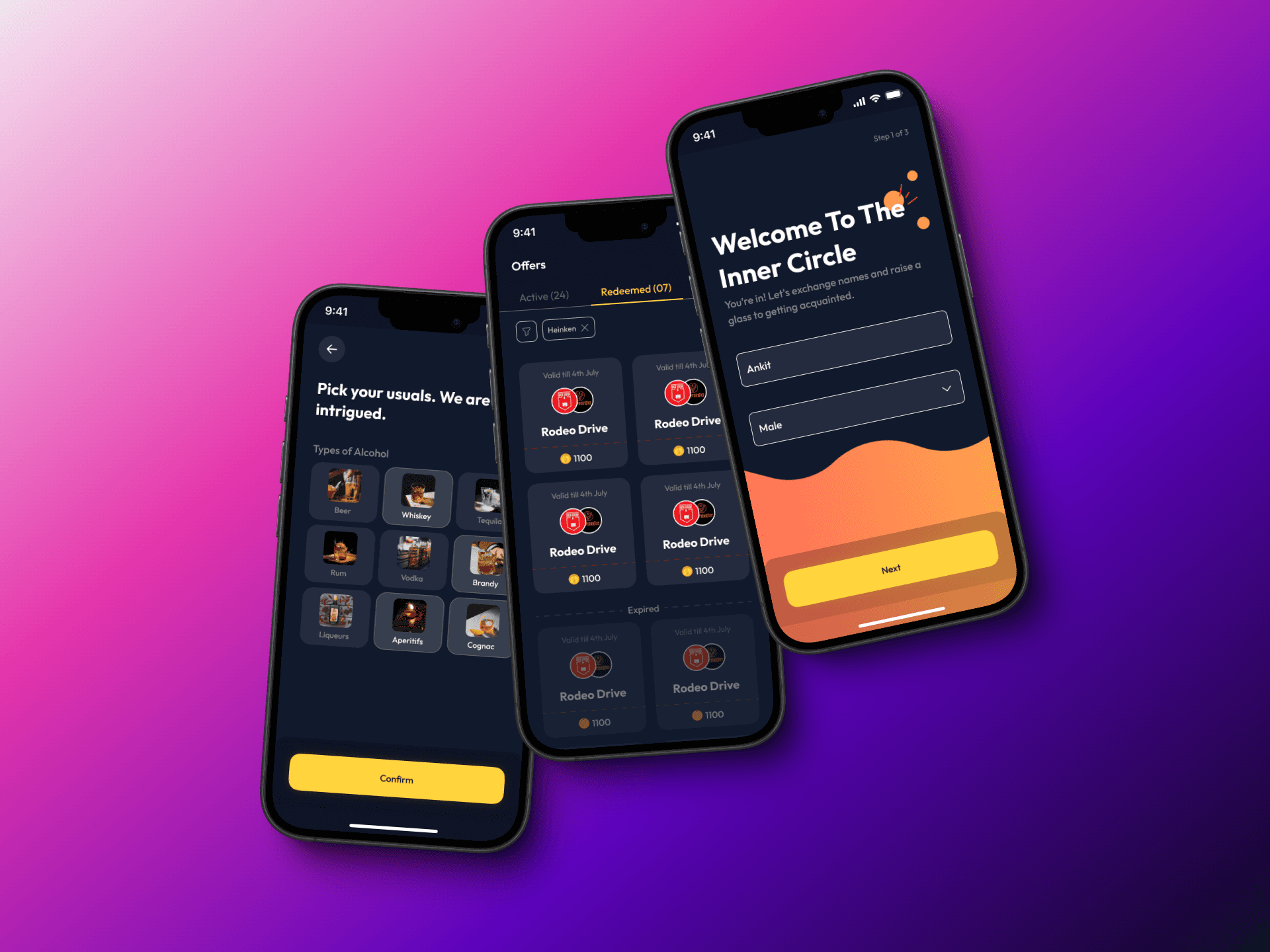
• Personalized Dashboards: Alcohol preferences influencing rewards and offers.
• Dynamic Brand Pages: Feed-style layouts featuring offers, descriptions, and engaging multimedia.
4. Engagement Mechanics
• Integrated gamified features like “Earn Your Code” quizzes.
• Introduced weekly interactive content such as brand stories, cocktail previews, and tips.
5. UI Design
• Adopted a clean, modern aesthetic aligned with premium alcohol brands.
• Ensured a balance between functional screens (bill uploads, offers) and discovery screens (brand pages, content feed).
6. Prototyping and Testing
• Iterated on Figma prototypes based on feedback from user testing.
• Tested onboarding flows, bill upload functionality, and reward systems for usability.
What did we do?
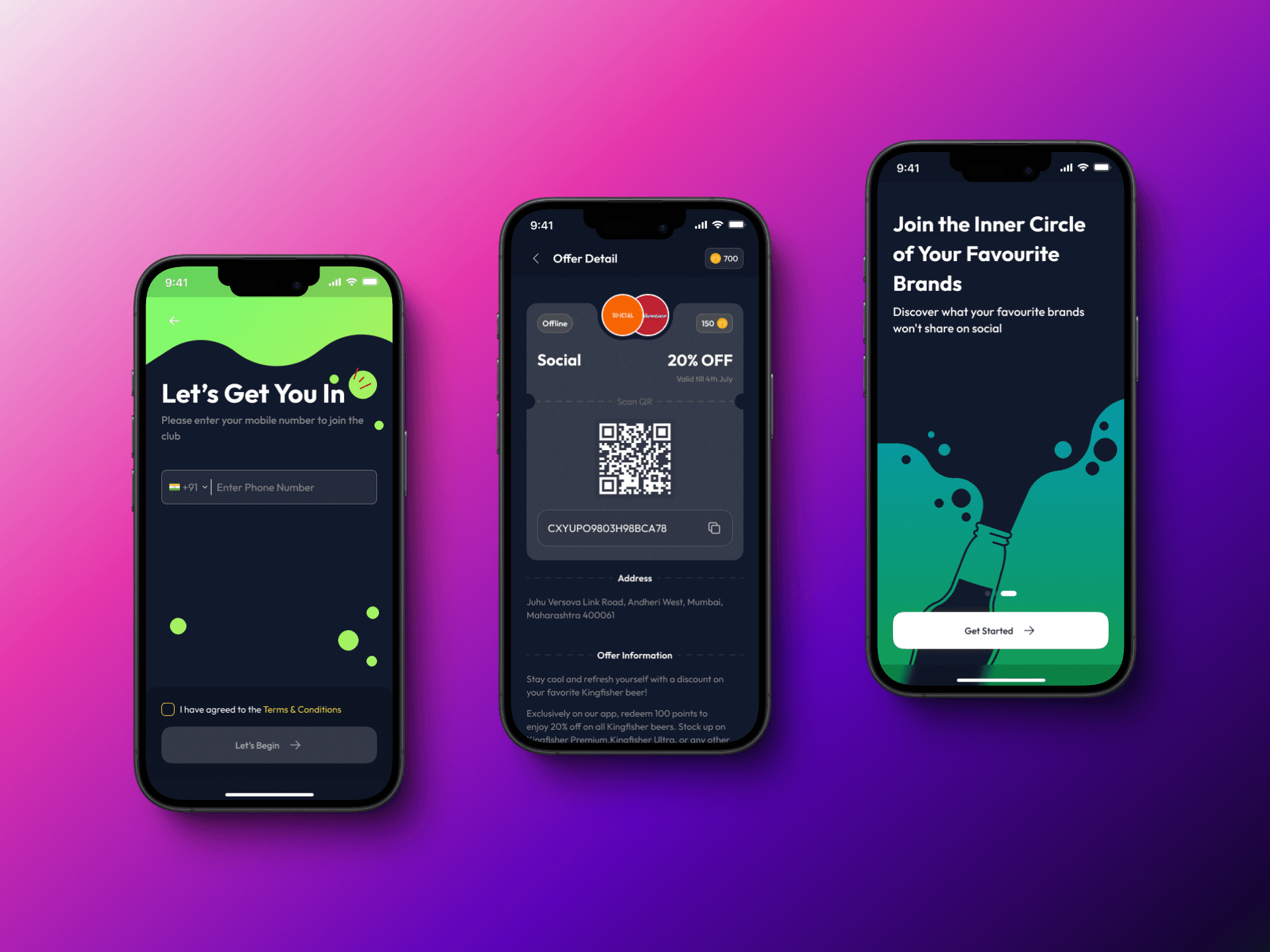
Onboarding Experience
• Designed e-mail less and flexible KYC options (with Aadhaar, selfie uploads).
• Allowed users to skip KYC initially, prompting it only for redemption.
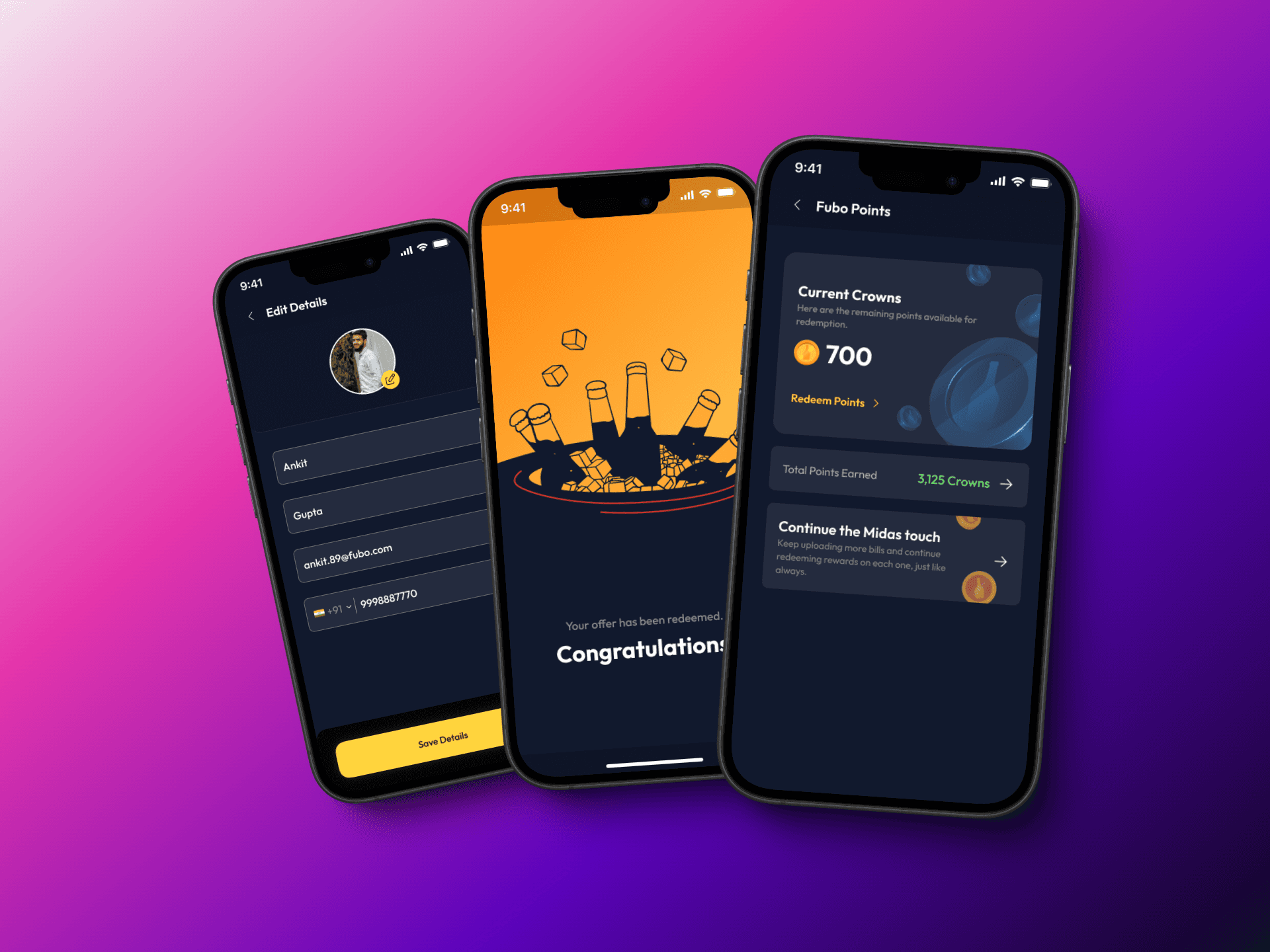
Reward Mechanics
• Created a dynamic points system:
• 10 coins per ₹100 spent.
• Offers with a 48-hour processing window and expiration timelines.
Engagement Features
• Feed-style brand pages: Stories, offers, multimedia content, and recommendations.
• Gamified “Earn Your Code” quizzes to attract new users.
• Weekly updates with cocktail recipes, trends, and premium brand stories.
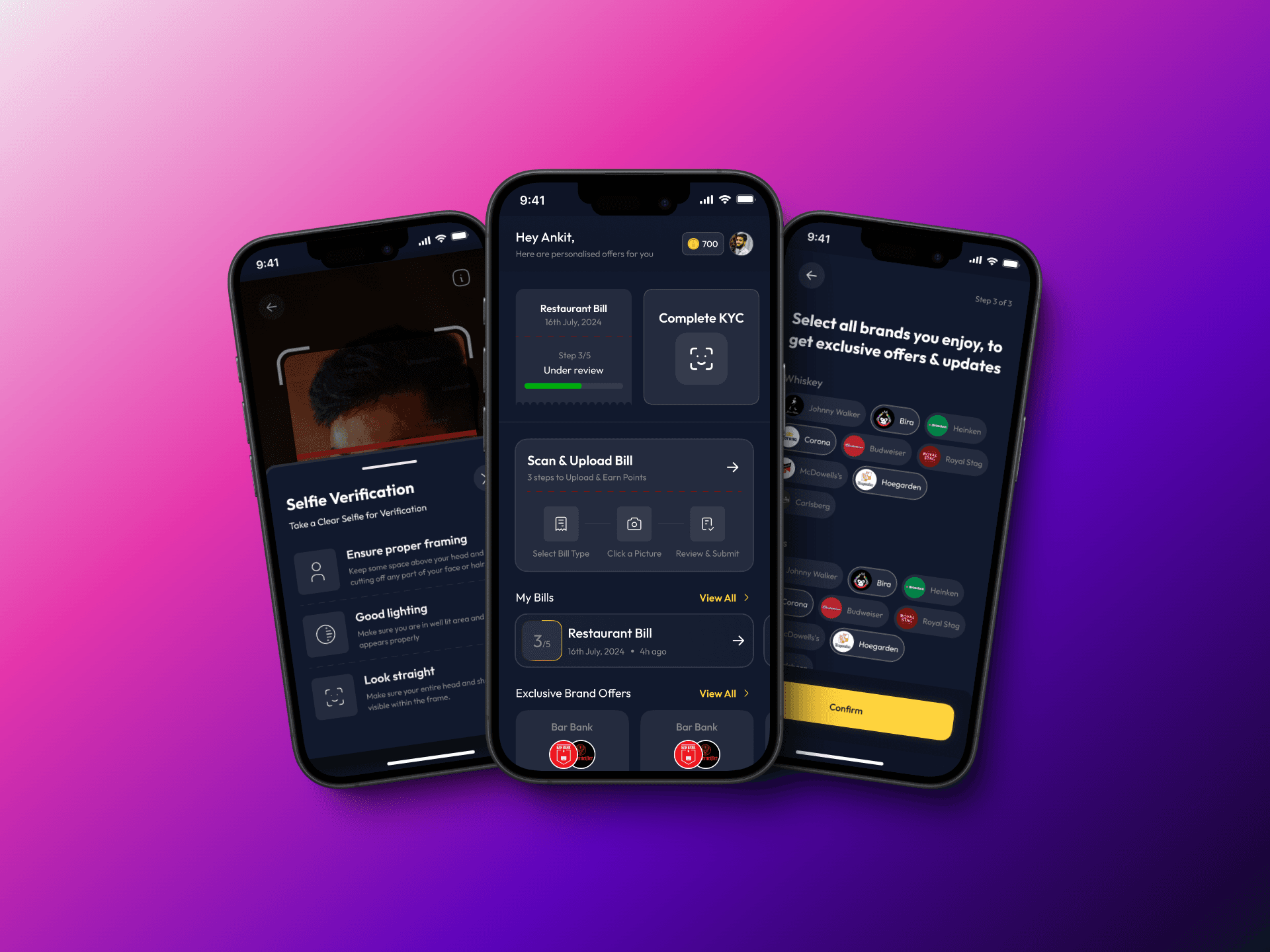
Visuals:
• Sample designs of the dashboard, reward redemption screens, and brand feed pages.
• An example quiz flow for “Earn Your Code.”
Results
While FuBo is currently in development, our design and feature set aim to achieve the following projected results:
1. Improved Onboarding Experience
• Simplified KYC and non-mandatory expected to increase onboarding completion rates by up to 40%.
• Flexible options to skip KYC initially will reduce friction, ensuring more users join the platform.
2. Enhanced User Engagement
• Weekly updates featuring brand stories, cocktail previews, and gamified quizzes like “Earn Your Code” are designed to encourage users to visit the platform at least once a week.
• A personalized dashboard with alcohol preferences will make the experience more relevant, boosting retention.
3. Value for Premium Brands
• Anonymized consumption data and user preferences will enable brands to tailor offers, creating a 10-15% increase in user engagement with brand content.
• Feed-style brand pages with dynamic multimedia content are expected to improve visibility and interaction rates.
4. Scalable Framework
• The platform is being built with a modular structure, allowing for seamless integration of new features in future phases, such as restaurant-specific offers and transactional capabilities.